tagline
Thursday, October 22, 2026

“Louisiana v. Callais is the culmination of the life’s work of Chief Justice Roberts and Samuel Alito, who have shown persistent resistance to the idea of the United States as a multiracial democracy …. It protects Alito’s core consistency: aggrieved white Republican voters. It’s a disaster for American democracy.”
Richard L. Hasen, UCLA Law Professor, author of A Real Right to Vote
The U.S. Supreme Court recently eviscerated what was left of the 1965 Voting Rights Act in Louisiana v. Callais. The six Republican-appointed justices ruled that partisan gerrymandering to wipe out voters of color was not racial discrimination. Alabama, Louisiana, and Tennessee were so excited to cancel their African-American voters that they immediately suspended congressional primaries and candidate filing deadlines already in place, so the Supreme Court’s ruling would alter the looming 2026 elections. It nullified the efforts and sacrifices of the Freedom Riders, sit-ins, marchers, and boycotts of the 1950s and 1960s that forced President Johnson to sign the 1965 legislation ending poll taxes, harassment, and “literacy” tests of African-American voters. The deaths of civil rights workers Goodman, Chaney, and Schwerner and countless others in the movement were seemingly in vain.
Headwind is honored to present an analysis of the ruling by one of the foremost experts on voting rights, UCLA Law Professor Richard L. Hasen, author of numerous books on elections, including this year’s A Real Right to Vote.
In addition, Headwind takes our readers to ground zero of the civil rights movement with the 1965 never-before-published, first-hand, personal account of Debbie Green, who left New York City two months after the signing of the 1965 Voting Rights Act to go to Amite County, Mississippi, to register rural African American voters.
Headwind is equally honored to present its interview with Father Gregory Boyle, founder of Homeboy Industries, and pastor of Dolores Mission Church in East Los Angeles. The church is located in a neighborhood with the highest concentration of murderous gang activity in all of Los Angeles. Father Greg tells Headwind about his transformative experience in Bolivia, and how he came to the belief that everybody is unshakably good, no exceptions.
As American residents and citizens are being rounded up, arrested, beaten and shot by ICE, Headwind presents a timely interview with Don Hata, an American citizen of Japanese ancestry, who was arrested and incarcerated at age three under the liberal Democratic administration of Franklin D. Roosevelt. Don tells Headwind about being incarcerated from 1942 to 1945, the constant presence of barbed wire and pointed guns, and what it was like returning to Los Angeles after the loss of his parents’ home and business. We also present some of Don’s paintings depicting the concentration camps detaining Japanese Americans.
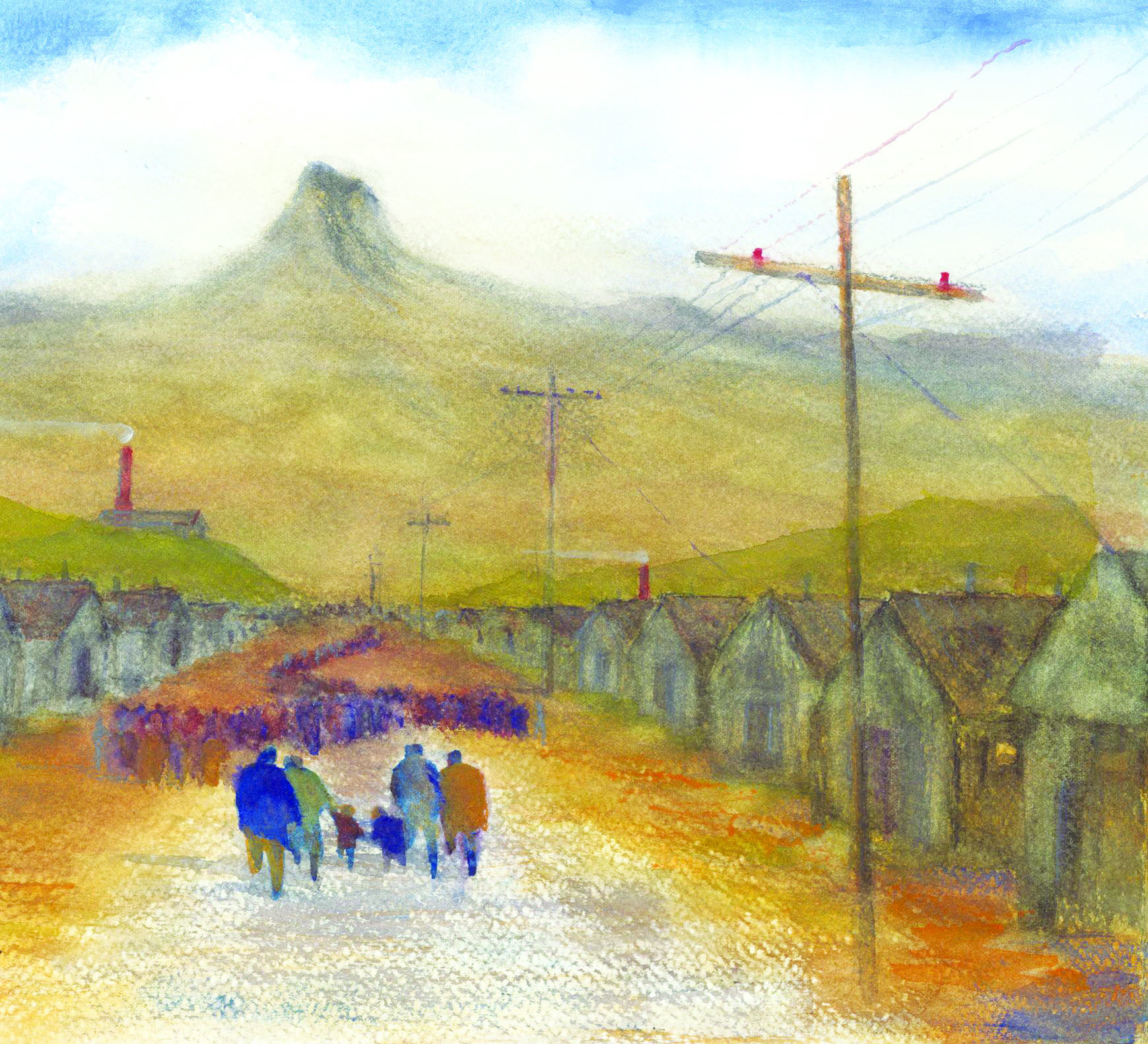
In the wake of the United States’ unprovoked attack and war on Iran, evoking yet another level of outrage over America’s endless and mindless wars, Headwind presents its interview with Mike Prysner, who counsels members of the military and helps them through the process of obtaining conscientious objector status within the military. Mr. Prysner cites Welch v. United States to explain that moral, and not just religious, objections are now a basis for conscientious objection to war. He counsels record numbers of active-duty servicemen and women who now object to war on moral grounds.
Headwind also speaks to Jason Alfonso, a former gang member who describes growing up with an abusive father in a neighborhood with a large gang presence, and coping with the daily specter of violence and death.
Terrance Steele, serving a life sentence for a crime he did not commit, uses the metaphor of time to convey his thoughts about prison life and the present.
Headwind showcases some of the best poets from around the state, around the country, and around the world, with outstanding poetry from James Cagney, Alexis Rhone Fancher, Ron Koertge, Mariana Lin, Cristina Nehring, Vanessa Poster, and Cecilia Woloch.
Linda Neal was Headwind’s first poetry editor. A poet and teacher of poetry, Linda brought the joy of poetry to her countless followers who attended her readings, classes, and workshops. We present a memorial to Linda that includes tributes from some of the many poets who knew and loved her.
Tell us what you think about Headwind by emailing us at dan@headwindmag.com