 tagline
Sunday, April 5, 2026
tagline
Sunday, April 5, 2026
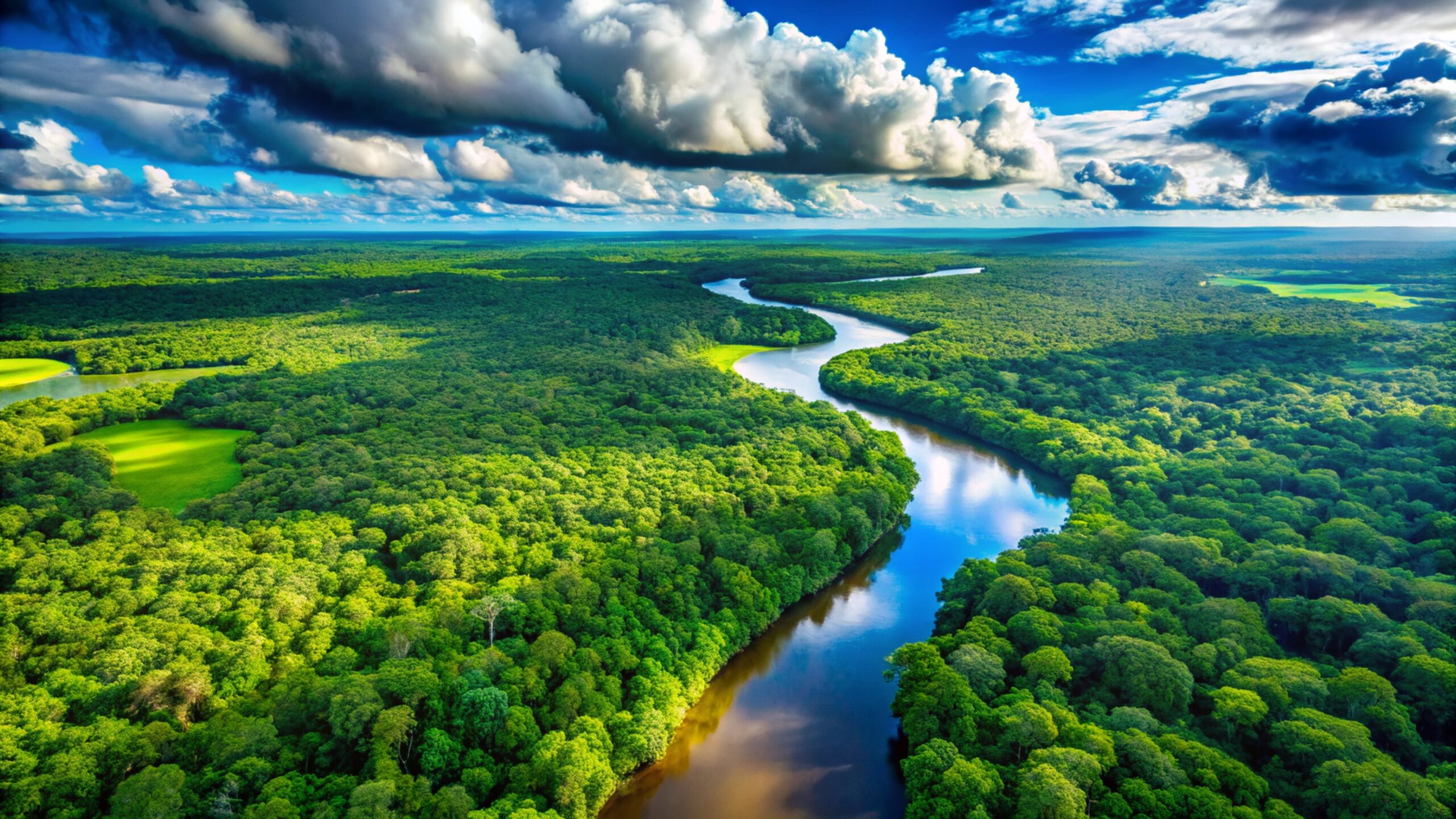 Amazon Rain Forest (Shutterstock)
Ferris Jabr is the New York Times bestselling author of Becoming Earth and a contributing writer for The New York Times Magazine. Becoming Earth was a finalist for the Los Angeles Times Book Prize and the Oregon Book Award and was named a best book of the year by Smithsonian, Barnes & Noble, and the Chicago Public Library. Reviewers have described Becoming Earth as an “electrifying” and “infectiously poetic” “masterwork” that “earns its place alongside the best of today’s essential popular science books, as well as acknowledged classics.” Ferris has also written for The New Yorker, The Atlantic, Harper’s, National Geographic, and Scientific American, among other publications.
Excerpts from the Ferris Jabr Interview on
Becoming Earth: How Our Planet Came to Life
“A single gallon of gas represents one hundred tons of ancient life, the extravagant equivalent of twenty adult elephants.”
“Rainforests and other highly vegetated areas emit a mélange of larger biological aerosols: a complex mixture of organisms and organic entities — whole and fragmented; alive, dead, or somewhere in between — including viruses, microbes, algae, and pollen grains; the spores of fungi, mosses, and ferns; bits of leaves and bark; flecks of fur and feather; and slivers of scales of insect shells. This levitating assemblage of life and its vestiges can seed both clouds and ice crystals, significantly increasing the likelihood of rain and the pace of the water cycle. create a powerful feedback loop; the more it rains, the more the forest grows; the more the forest grows, the more water, cloud-seeding particles, and ice nuclei it lofts into the air; the more quickly clouds form and swell, the more frequently it rains. The 20 billion tons of water that gush from the forest to the atmosphere every day exceed the volume discharged by the Amazon River itself.”